Tuesday, August 30, 2016

Disney Remakes

If you've paid any attention to Disney's releases recently, you'll notice a growing trend of doing live-action remakes of their popular animated films. Cinderella and The Jungle Book have both been released recently, with Beauty and the Beast on the way, not to mention Pete's Dragon a couple weeks ago. The studio also has Aladdin, The Sword in the Stone, and The Little Mermaid in production. This has disheartened many movie fans, and I can't entirely disagree. These big "unnecessary" remakes seem a pointless cash grab, an annoying trend, and overshadow other wonderful small releases that Disney puts out with little fanfare. They have one such film coming next month called Queen of Katwe that I am very interested in. I encourage you to seek it out and urge Disney with your dollars to make more variety. Still, one thing that gets lost in all of this hand-wringing about soulless remakes is how myopic it is: the Disney studio has been remaking itself since the beginning.

Often these remakes tend to go in cycles or phases, just as there was a period when Disney made a bunch of movies with cats and dogs, or that time in the 1990s when they did live-action versions of old TV shows. No one much liked that trend either (though George of the Jungle did well), but it continued for a solid few years (with Underdog a final gasp a few years later). My intention here is to highlight some of the many times Disney has gone back to the well and remade its own content. This list is by no means exhaustive, as I'm sure there will be some I forget. And of course there are many cases where, while not a true remake, major elements were reused in a later film. For example, while technically different stories, the two Mickey Mouse cartoons "Giantland" and "Brave Little Tailor" have many identical gags in how Mickey interacts with and defeats the giant. I also didn't comprehensively look through all their television output. But without further ado, here is a trip through Disney's history of remakes.

1. ORPHAN'S BENEFIT (1933)/ORPHANS' BENEFIT (1941)


While there were a few other shorts that were sort of remade (I'll get to them below), the first major remake was of the 1933 Mickey Mouse cartoon "Orphan's Benefit". This cartoon is notable for being the first appearance in a Mickey Mouse short of Donald Duck, who had first appeared in a Silly Symphony called "The Wise Little Hen". The 1941 is a shameless remake that is literally the entire cartoon shot-for-shot but done in color and with the more contemporary designs of Donald and Goofy. All the animation is the same. So for those who complain (as do I) about all the re-used animation in films of the 1970s, the company had been doing it before. While all the jokes still work, and it's nice to see in color, it doesn't have quite the same life for me as the 1933 version. The old-fasioned animation gags feel a little out of place at times when it lacks the old "rubber hose" style. Funny when people talk about unnecessary shot-for-shot remakes, they never mention this. I think it was done because simply re-releasing it might have been difficult with Donald's design having changed so much.

2. THE FOX HUNT (1931/1938)
Image result for the fox hunt disneyImage result for the fox hunt disney

Another series of shorts, this time the basic premise is going on a fox hunt. The original was a Silly Symphony, and I could have sworn there was a third cartoon with Mickey Mouse, but I couldn't find it in my notes. The 1938 version is one of several popular Donald and Goofy pairings. The cartoons are mostly rather different beyond the basic premise, and this is one case where the later is actually superior in a number of ways. Goofy's business with his horse is delightful (and prefigures the later short "How to Ride a Horse"), and Donald with his pack of dogs is fun too. Both cartoons end with the same gag, the finding of the "fox", only to learn it was a skunk.

3. THE UGLY DUCKLING (1931/1939)
Image result for disney ugly duckling    Image result for disney ugly duckling
It's a stretch to even call this a remake; more like similar shorts with the same title. The latter is a straight adaptation of the Hans Christian Andersen story, and is truly a masterpiece. If you've seen one of these, odds are it's that one. The Oscar-winning cartoon was also referenced in Lilo & Stitch. The 1931 cartoon is not about a swan born to a family of ducks, and shares only cursory connections to the Anderson tale. In this story, it really is a duckling, and it really is ugly (hilariously goofy-looking). This duckling hatches among a hen and her chicks on a farm. The mother hen tries to shoo it away. But then a flood comes and washes her chicks down the river, and the ugly duck (because he can swim), saves them all and is no longer ostracized. While the later short focuses on finding the right place you belong and someone that loves you, the earlier film focuses on seeing the good in people even though they are different. It's a funny cartoon, and well worth seeing. The later one may have more emotional weight, but I recommend seeking out the earlier.

4. FATHER NOAH'S ARK (1933)/NOAH'S ARK (1959)/FANTASIA 2000
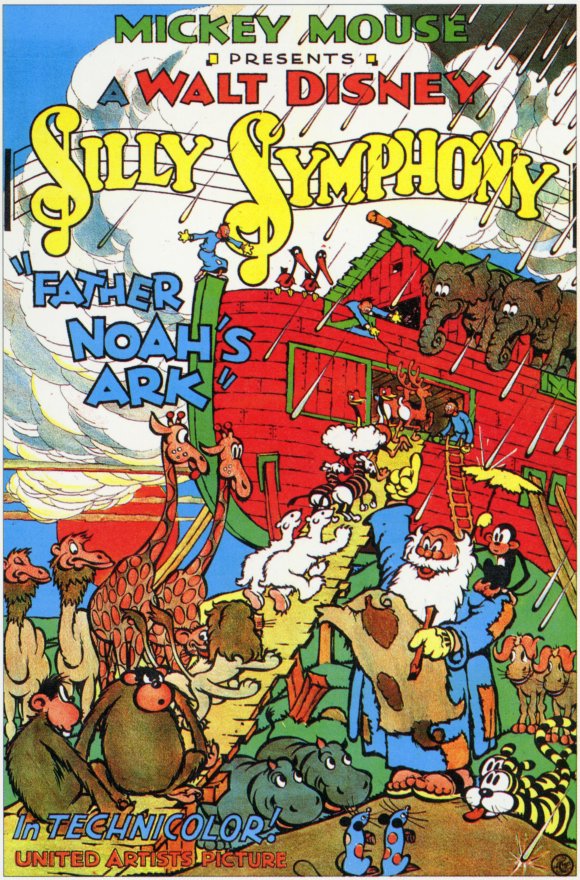
Image result for father noah's ark 1933

This also isn't exactly remake territory, but more a case of returning to the well of a well-known story. The 1933 Silly Symphony is a pretty straightforward musical telling of the story of Noah. The company has gone on to tell the Noah story multiple times. In the late '50s and early '60s a couple of artists at the studio, Bill Justice and Xavier Atencio (commonly credited as X) paired up with a very distinctive style, and designed a directed some shorts you might know, like "A Cowboy Needs a Horse". But they were also interested in stop-motion, and indulged their side interest by doing the opening credits to The Parent Trap, sequences for "A Symposium on Popular Songs", and a pet project, "Noah's Ark." Their version is also musical, but it is a much longer short subject and focuses more on time in the ark. All of the characters are cleverly composed of pipe-cleaners, pencils, and random craft supplies. It looks very much like a Sunday School production. The major theme of this film is learning to love each other, with a side story about the animals on the ark not getting along, and Noah helping marital relations between hippos (no, not in THAT way, you pervert). More recently, Noah's story was mined for the Pomp and Circumstance sequence in Fantasia 2000, starring Donald and Daisy Duck.
Image result for fantasia 2000 pomp and circumstance

5. MICKEY'S PAL PLUTO (1933)/LEND A PAW (1941)

Image result for mickey's pal pluto    Image result for lend a paw

Many people are familiar with the 1941 Academy Award-winning remake in which Pluto is first antagonistic to a kitten Mickey takes in, but later saves it from drowning in a well. The cartoon works well, and its use of color definitely adds to its appeal. But many may not realize that this story was actually a remake of a prior Mickey Mouse cartoon from 1933. The black-and-white original differs in several ways, particularly in that it is not one but an entire bag of kittens that Mickey rescues and takes in. Minnie is also present in this cartoon. The sheer number of kittens crawling all over the house getting into Pluto's things makes his exasperation and anger much more understandable. And I don't know for certain, but I think this cartoon may be the origin of the trope of a character's conscience being represented by an angel and devil on each shoulder.

6. THE BIRTHDAY PARTY (1933)/MICKEY'S BIRTHDAY PARTY (1942)
Image result for birthday party mickey  1932    Image result for birthday party mickey  1942

With Donald Duck's popularity on the rise and Mickey Mouse's waning in the 1940s, the studio seemed to find it difficult to make new Mickey cartoons. Far fewer Mickey shorts were produced in the 1940s, and three of those were remakes. In this one, Mickey's friends surprise him with a birthday party. They sing and dance while Goofy struggles with the cake. While the remake maybe lacks a certain something (returning to the style of the prior decade, there's very little story which differs strongly from the other things Disney was putting out), it does have some charm and some very memorable animated moments. Most memorable for me is the sequence of Mickey dancing with his hat and cane. They seem to have learned their lesson from "Orphan's Benefit"; at least this remake has a bit of fun on its own terms.

7. CHICKEN LITTLE (1943/2005)
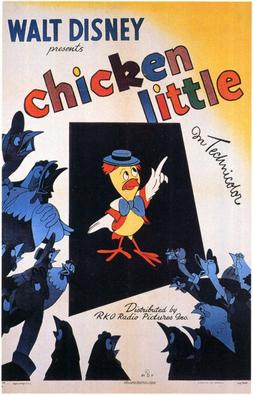
Image result for disney chicken little 1943   Image result for disney chicken little

Disney's first all computer-generated feature produced by the studio was Chicken Little. (Technically Dinosaur is now counted in the official canon but at the time it was made by a separate arm of the studio that was later folded in, and it also features live-action backgrounds. So it doesn't count.) This feature involves a star-studded cast and space aliens and I hate it. I think it's an awful movie, and I remember thinking "you shut down hand-drawn movies for this?" But my personal feelings aside, it's clear that it bears only rough relation to the original story. A more traditional take on the tale was made way back during World War II. This short is lighter on comedy and has a morose ending (everyone dies!). There are no space aliens. Instead, it was used as an allegory for the happenings in Nazi Germany and a message to Americans about being easily manipulated.

8. ROBIN HOOD (1952/1973)

Image result for story of robin hood and his merrie men   Image result for disney robin hood

We're all familiar with the 1973 animated Robin Hood in which all the roles are played by animals. While that films does reuse a lot of animation throughout, that's not why it's on this list. That wasn't the first time the Disney studio had done the Robin Hood story. In 1952, Disney released The Story of Robin Hood and His Merry Men. If you haven't seen it, I'm not surprised. I haven't either. The image in most people's mind tends to be the classic 1938 Adventures of Robin Hood. But Leonard Maltin still speaks highly of the Disney version.

9. POLLYANNA (1960)/POLLY (1989)

Image result for pollyanna      http://cdn3.volusion.com/wnjpb.kfenr/v/vspfiles/photos/polly_1-2-8.jpg

The Disney studio's remake machine was quiet for decades, and then the 1990s began to roll around. We come into the late 1980s and the era of Michael Eisner, and our first television remake. Disney's Pollyanna starred Hayley Mills in an adaptation of the book, and people still remember that version. But I grew up on Polly, a version of the story told with a black cast set in the 1950s made for The Magical World of Disney anthology series. Polly is a musical, starring Keshia Knight Pulliam and Phylicia Rashad from The Cosby Show. It's one of those times an all-black version (apart from Ms. Snow who guess what? is white) really succeeds in being just as good. It was so popular they even made a sequel, Polly Comin' Home, the following year.

10. THE ABSENT-MINDED PROFESSOR (1961/1988)/FLUBBER (1997)
Image result for absent minded professor      Image result for flubber   https://blogger.googleusercontent.com/img/b/R29vZ2xl/AVvXsEgTsNocd9Whe9u7N_R4nbQ_8cIo1qJE6vPzpwXXr4wDto51sgWBnI_94MBB8BIldMxMkeM_YtNLXNro90YCVAyhOz9BmT6A7AiIDBxSzefGhB74_UMkymWzIY4qwDAWjZhagCrq92M58TU/

Walt Disney's goofy science fiction story about a scientist who creates a mysterious "flying rubber" and uses it to make is car fly and help the high school cheat at basketball (yes, that's the plot), is an amusing yarn that gave us the word "flubber". I grew up on this movie, both in its black and white form and the colorized version, which told us that flubber was green. Green flubber was front and center in the big Robin Williams-led remake Flubber, which was even goofier than the original if that's possible. Many people might remember that '90s remake, but many would also be surprised to learn it was not the first. It was actually the fifth film to feature the gooey substance. Walt's original film spawned a sequel, Son of Flubber. (Another post exploring Disney sequels might be in order.) But there were another two movies made for the Magical World of Disney television program in the late 1980s. Starring Harry Anderson as the titular teacher, 1988's Absent-Minded Professor was a point-by-point remake of the original, but also a kind of sequel. Like the current in-continuity reboots of our day (such as the JJ Abrams Star Trek), this movie existed in a universe where the first movie had happened. The professor discovers the formula for flubber from the previous professor's notes, and the story plays out just as it did before. This reboot was successful enough that they produced a follow-up film, The Absent-Minded Professor: Trading Places. I remember liking the sequel even more. It's a real shame these two movies are not easily available. They are both better than Flubber.

11. THE INCREDIBLE JOURNEY (1963)/HOMEWARD BOUND: THE INCREDIBLE JOURNEY (1993)
Image result for incredible journey    Image result for incredible journey
To a certain generation, Homeward Bound is better known than the original book adaptation that Walt Disney made thirty years prior. Homeward Bound was very successful and a sequel was made a few years later. Thankfully, even though the animals talk in this these later films, it was before Babe popularized computer-generated lip sync.

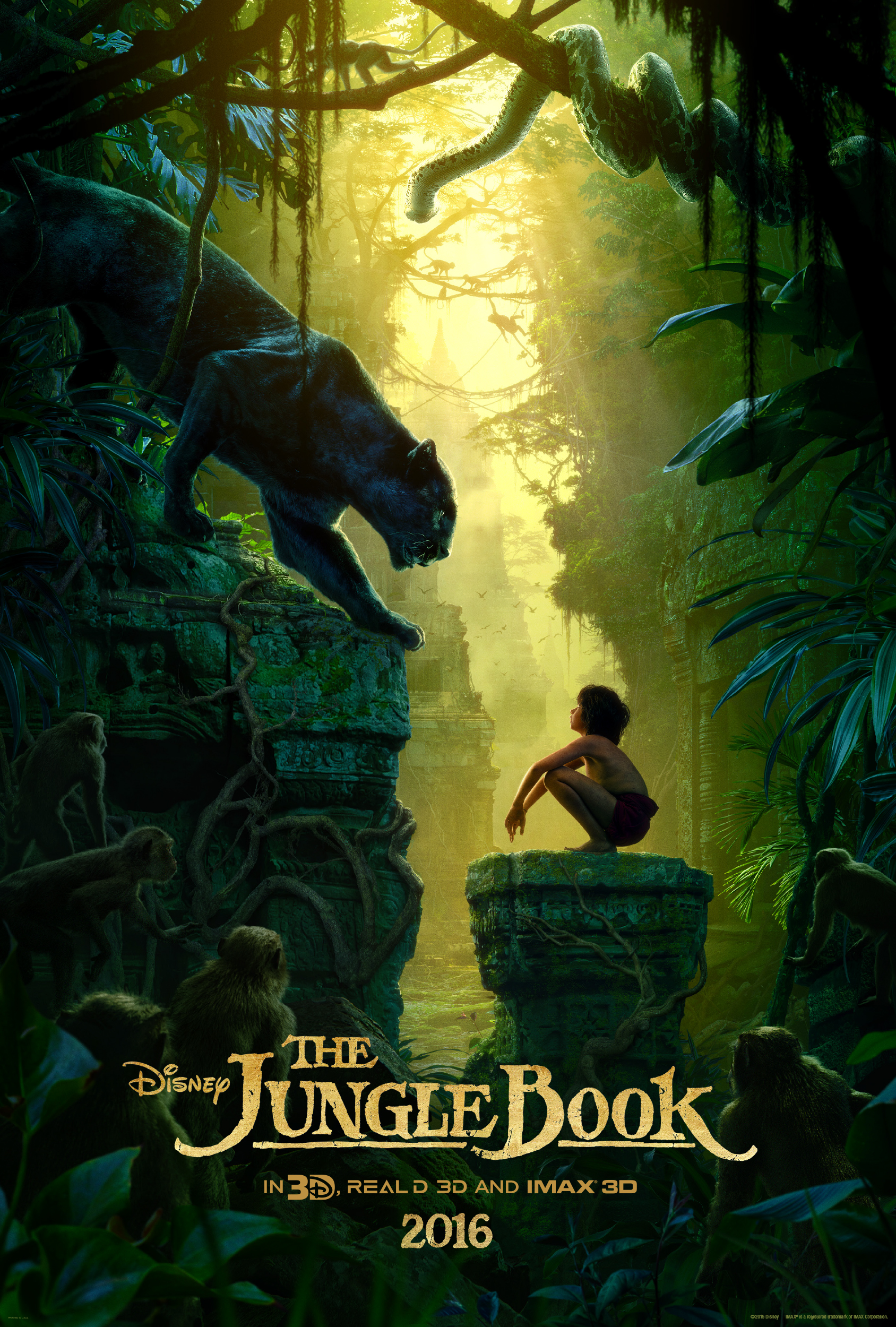
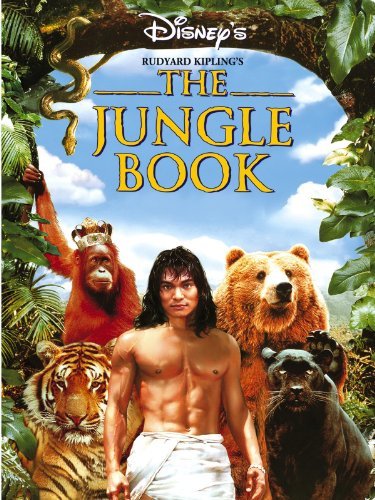
12. THE JUNGLE BOOK (1967/2016)/RUDYARD KIPLING'S THE JUNGLE BOOK (1994)
https://upload.wikimedia.org/wikipedia/en/1/1d/Thejunglebook_movieposter.jpg   Image result for disney jungle book 2016

 Image result for disney jungle book 1994
This year's successful Jon Favreau-helmed 3D take on the animated Jungle Book has made people forget that twenty years ago there was another live action take on Mowgli. Rudyard Kipling's The Jungle Book was a very different story, featuring a more adult Mowgli now out of the jungle. Elements of this story originate in a treatment Bill Pete had done for the animated version back in 1967 before Walt basically told them to throw the book away. I haven't watched the '94 film in years, but I like it for being different. It's also a solid action-adventure movie, and scary at times. I remember reviews sour on it for not being more like the original. This year's version got rave reviews, so I guess the studio gave them what they wanted. The 1994 film spawned a direct-to-video prequel movie, The Jungle Book: Mowgli's Story (being more the adventures of young Mowgli that people might expect). These combined with the truly awful animated sequel to the original add up to five films from this property.

And now we come to 1995, the year of the TV remakes.

13. THE COMPUTER WORE TENNIS SHOES (1969/1995)

Image result for kurt russell computer wore tennis shoes     Image result for the computer wore tennis shoes 1995
The studio got into something of a groove in 1995. For their Sunday night Magical World of Disney program, as they had several times in the 1980s, the studio decided to remake some classic films of the 1970s era after Walt had died. This was the age of Jodie Foster and Kurt Russell, which spawned three '95 remakes.

The first of these is arguably the best. The Kurt Russell teen sci-fi romp about a kid who gains super intelligence, was remade starring Kirk Cameron. Fresh off Growing Pains but before becoming a growing pain in preachy Christian movies, Cameron is a great choice for the lead. He was young and charismatic, and the movie reflects a nice kind of charm. I enjoyed this movie a lot, and there are lines I still remember to this day. It was this movie that taught me who shot President McKinley ("That is just what they want you to think! Czolgosz was a patsy. Read the facts, Alan! Read the facts!"). Neither film is a great work of art, but the remake is a solid film for a newer audience and well worth checking out if you can find it.

14. FREAKY FRIDAY (1977/1995/2003)
http://www4.pictures.zimbio.com/mp/_ot51Z8yG5Ql.jpg

The classic Jodie Foster body-swap movie was remade twice. The story of a mom and daughter who realize how tough the other has it, was re-imagined in the popular version that starred Lindsay Lohan and Jamie Lee Curtis. This wasn't Lindsay's first foray into Disney remakes. But neither was it the first attempt to retell this story. Not ten years earlier there was a version for television which starred Shelley Long as the mom and Gaby Hoffmann as her daughter. This version is very much of its time. The most memorable thing about it to me is the image of Shelly Long rollerblading down the street. It's amazing looking back at the mid-1990s and seeing what a fad rollerblades were.

15. ESCAPE TO WITCH MOUNTAIN (1975/1995)/RACE TO WITCH MOUNTAIN (2009)

The Witch Mountain saga is a long and complicated one, so I'll try to take it slowly.
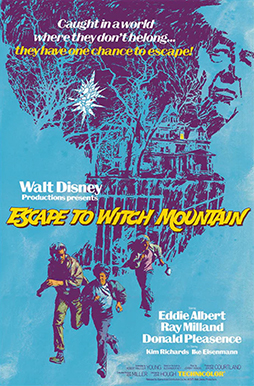
https://upload.wikimedia.org/wikipedia/en/d/d0/Escape_to_witch_mountain_movie_poster.jpg
In 1968, Alexander Key wrote the novel Escape to Witch Mountain about two orphan children, Tony and Tia, with strange telekinetic abilities who are drawn to Witch Mountain. The Walt Disney studio adapted this book to film in 1975. Much of it is rather faithful to the book with two major exceptions: they befriend a man named Mr. O'Day in the movie, whose book counterpart is a priest, Father O'Day. Secondly, in the book, Tia cannot speak and so she writes on little pieces of paper she keeps in a box. The star-box remains in the film, but Tia is no longer mute.

https://upload.wikimedia.org/wikipedia/en/a/a8/Return_from_Witch_Mountain,_film_poster.jpg

Several years later, Disney produced a sequel, Return to Witch Mountain. Alexander Key adapted this film into a book sequel to his original novel. Tia in the book now speaks, as the plot depends on it.

Image result for beyond witch mountain

In 1982, Disney goes back to the well again with Beyond Witch Mountain, a television movie intended to be the pilot for a new series which was never made. This movie is a sort-of sequel to the original, but with the kids recast (Tia is played by Kirk Cameron's future Growing Pains co-star Tracy Gold). For those of you who like me who have vague memories of this movie, no you did not imagine it.

Image result for beyond witch mountain

Then in 1995, a new Escape to Witch Mountain was made for television. It is Witch Mountain in name only. While the original has a twist ending that I won't spoil (even though contemporary cover art does), this film takes it in a completely different direction. It has almost nothing to do with any of the elements of the prior films, and is terrible. In this movie, Tony and Tia actually have identical twins in a parallel universe or something crazy like that. I saw it as a kid and hated it for what they did to the story. Avoid this version.

Image result for race to witch mountain

Finally, a modern take on the story was made in 2009, Race to Witch Mountain. After the huge disappointment that was the 1995 version, I never saw this one. But it stars Dwayne "The Rock" Johnson if that interests you.

16. ONE HUNDRED AND ONE DALMATIANS (1961)/101 DALMATIANS (1996)
Image result for 101 dalmatians movie   Image result for 101 dalmatians movie
Disney struck gold again with a live-action remake of a classic animated property. Since Rudyard Kipling's The Jungle Book was very different, we might say this is the first true live-action remake of one of their animated films. It's not a new phenomenon. And this one, starring Glenn Close as Cruella De Vil, was hugely successful that holiday season. It was very slapstick, from a script by John Hughes in his Home Alone phase, but featured a great cast (including Jeff Daniels and Hugh Laurie). They also wisely decided not to make the dogs talk. Both films are nice compliments to each other. The cartoon ends up being a little more grounded, but the cartoonish elements of the live-action film are tempered by the more natural dog action. The movie spawned a bit of a resurgence in dalmatian fever, with a live action sequel, 102 Dalmatians, following, as well as a Saturday morning cartoon series.

17. TREASURE ISLAND (1950)/MUPPET TREASURE ISLAND (1996)/TREASURE PLANET (2002)
Image result for disney treasure island   Image result for disney muppet treasure island   Image result for treasure planet disney

The first entirely live-action feature that Walt Disney made was Treasure Island. It remains one of the classic Disney films. Disney even produced a sequel miniseries, Return to Treasure Island, in 1986. As it's also a work of classic literature, it's no surprise the studio would try adapting it again. The first of these new adaptations starred the Muppets. After Jim Henson's Muppets came under the Disney umbrella in the 1990s they made the hugely successful Muppet Christmas Carol. When that was a success, it seemed only natural to follow it with another classic English literary adaptation. While not as strong a film, Muppet Treasure Island is a lot of fun. Finally, the animation studio tried a fresh take on the novel by setting it in space and calling it Treasure Planet. This movie is wildly ambitious and while it doesn't all work as well as it could, it has some standout moments and visual ideas. Treasure Planet was nominated for an Oscar for Best Animated Feature.

18. That Darn Cat! (1965/1997)
Image result for that darn cat     Image result for that darn cat

Now it's time for a little story. Back in 1997, there was a major theatrical re-release of a little film you may have heard of called Star Wars. I was so excited to go see the Special Edition on the big screen. So one Saturday I talked my mom into dropping me off. I was there an hour early, and it was sold out. I was devastated. But I had to see something because everyone else was off at Chuck E. Cheese for the next few hours. So instead of seeing Star Wars, I went to see the remake of That Darn Cat! starring Christina Ricci. Not exactly a loss, because I had a huge crush on Ricci at the time. It's easy to forget the original with Dean Jones and Haley Mills, as well  as the remake, in which Jones also appears. It's weird how many movies Disney made about cats and dogs in the 1960s. Anyway, there you have it, there was a remake of That Darn Cat!

And I never did get to see Star Wars on the big screen until last year.

19. THE PARENT TRAP (1961/1998)
Image result for parent trap  Image result for parent trap
Well, if one Haley Mills remake could be moderately successful (two if we count Pollyanna), why not remake her most famous movie in which she played opposite herself? The Parent Trap had already spawned three television sequels with Mills reprising her role(s), but perhaps it was time to update the property. Enter Lindsay Lohan. With new motion control camera technology, Lohan burst on the scene in a well-received remake that tweaked just enough of the original. For example, the stuffy Boston of 1961 was transposed to London, England for the remake. I personally think the original has enough charm on its own, but the Lohan version remains one of the standout Disney remakes that actually works. And it reminds us of a time when Lindsay Lohan was young and innocent.

20. THE SHAGGY DOG (1959/2006)
Image result for shaggy dog    Image result for shaggy dog
Another bizarre movie from the Walt era about a boy cursed to turn into a dog, The Shaggy Dog is somehow one of those movies that sticks in the memory. So it is no surprise that the studio would eventually try their luck with it again utilizing modern visual effects technology. The new film starred Tim Allen as the guy who becomes a dog, already a change from the original. However, this idea of an adult turning into a dog does not originate with the remake. Disney in fact had made two sequels to the original film, both of which contradict each other. In the 1970s, Dean Jones portrayed an adult Wilby, now married, in The Shaggy D.A. In 1987, The Magical World of Disney aired the original film, and then followed it up with a new television sequel, The Return of the Shaggy Dog. This sequel ignored the earlier one, as Wilby is only just getting married in this one. I have still not seen the Tim Allen version.

21. ALICE IN WONDERLAND (1951)/ALICE IN WONDERLAND (2010)
Image result for disney alice in wonderland                 Image result for disney alice in wonderland 2010 
It's really not exactly a remake, but it's worth mentioning the Tim Burton Alice in Wonderland movie. This film is a very different sort of take on the Lewis Carroll stories, as Alice is grown up. It's more Alice by way of Return to Oz. And yet it should also be noted that the 1951 version is not the first attempt the studio made at adapting Carroll's work. In 1938, they used many elements from the books in "Thru the Mirror", a Mickey Mouse cartoon that paid tribute to the Alice stories. Walt Disney in fact had built a name for himself making short subjects about a live action girl in animated scenarios in the 1920s. These were dubbed the Alice comedies, with the pilot film, Alice's Wonderland, making explicit the homage to Carroll behind the idea. In the 1990s, the notion of Alice and Wonderland was re-imagined in an attempt to make a hip, cool, educational program for children, Adventures in Wonderland. You can tell it was made in the '90s because Tweedle Dee and Tweedle Dum are rappers in parachute pants and the White Rabbit goes around on rollerblades (there's those blades again!). With all of these trips to Wonderland (including the recent sequel Alice Through the Looking Glass), it's perhaps surprising that Walt hated the 1951 film, believing that it was a lot of craziness that had no real story behind it.
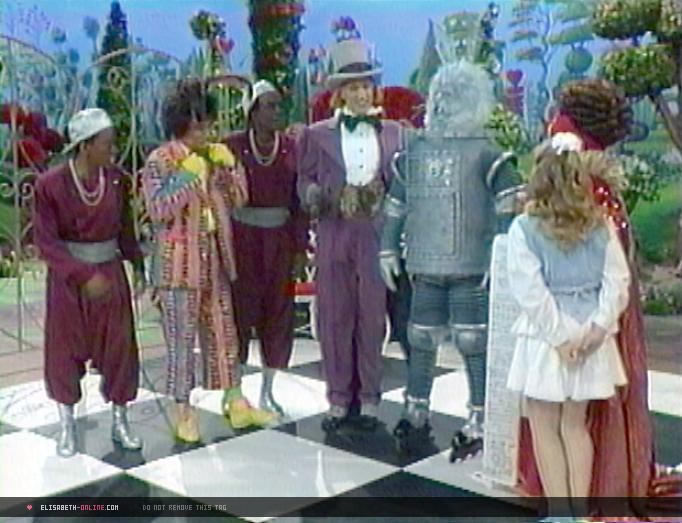
http://images.fanpop.com/images/image_uploads/Adventures-In-Wonderland-adventures-in-wonderland-679280_682_523.jpg

22. SLEEPING BEAUTY (1959)/MALEFICENT (2014)
Image result for sleeping beauty maleficent

Sleeping Beauty is my favorite Disney movie of all time. So when a quasi-remake was announced telling the story from Maleficent's point-of-view, I wanted no part of it. It was rumored after the success of Alice in Wonderland, and finally became a reality in 2014. It's not exactly a remake, as it's telling things from a totally different perspective, but it also really cemented the current trend toward remaking the animated canon. I still have never seen it.

23. PETE'S DRAGON (1977/2016)
Image result for pete's dragon 1977     Image result for pete's dragon
This year's Pete's Dragon bears little resemblance to the film that inspired it. All it retained were a boy named Pete, a magical dragon named Elliot, and a woman that befriends them. This year's film has a certain charm of its own, but it's a very different movie. As wacky as the original is, there's still something I prefer about it. Between the two of them, you're bound to find one that suits your taste.

24. CINDERELLA (1950/2015)
Image result for disney cinderella     Image result for disney cinderella 2015 scrubbing

Which brings us to Cinderella. I was pleasantly surprised by a lot of things about last year's remake. I went in truly expecting to hate it. In fact, the only reason I paid to see it was that the short "Frozen Fever" was screening before it. And while the animated film remains a masterpiece, the remake is not terrible. The worst parts are when it tries to draw direct connections to the animated version instead of standing on its own. There's no need to give the same names to the mice (though Jaq gets a sex change in the new one), or to have a cat named Lucifer. And Helena Bonham Carter as the Fairy Godmother was a total misfire. But so much of what remains is a lovely retelling of a classic story and I recommend seeing it. I still consider the animated film one of the smartest adaptations (making the story turn on the fact that Cinderella not only fits the shoe, but has the other one). Pay attention and you'll see they pepper in how Cinderella has a habit of losing shoes on stairs. This makes the dramatic moment at midnight not just a story contrivance, but totally in character.


Image result for disney cinderella 2015 scrubbing

But I would be remiss in my duties if I did not point out a third Cinderella that Disney made, and once again it was made for television. This was the 1997 remake of Rodgers and Hammerstein's Cinderella, starring Brandy and a multiracial cast. Where this worked in Polly, I never felt it worked as well here. I think it's the weakest of the three R & H Cinderella productions for a number of reasons. But that leads me to another thing interesting about this movie: it's a remake of a non-Disney film. And it's not the only one. So before we go, let's take a look at some other times Disney remade something they didn't originate.

ANGELS IN THE OUTFIELD (1994)
This effects-laden sports film was actually remade from a 1951 movie of the same name.

JUNGLE 2 JUNGLE (1997)
Tim Allen's follow-up to the hugely successful The Santa Clause was an English-language remake of a French movie called Un Indien Dans La Ville. I actually remember that a dub of the original had a very short theatrical run State-side in 1994 under the title Little Indian, Big City. Somewhere I have a tape with one of the TV spots for it.

MIGHTY JOE YOUNG (1998)
This King Kong follow up of the 1940s was done by Disney with modern effects in 1998 starring Charlize Theron. As a kid, I noticed the obvious parallels to Kong, but never knew that it was a remake of a film in its own right.

ADVENTURES IN BABYSITTING (2016)
Finally, one of our most recent Disney remakes is Adventures in Babysitting. This Disney Channel Original Movie is not so original at all, as it's a remake of the classic 1987 film starring Elisabeth Shue.

So I hope you've appreciated this little trip through Disney film history. Disney remakes are nothing new. All we can do is hope that those to come won't be too bad, and we'll ride out this wave until the next one comes along.

Saturday, July 30, 2016

Sunday, February 28, 2016

10 Best Films of 2015

Oscars are tonight, which means time for my annual top ten films post. As usual, this will only cover movies I've actually seen. Didn't get the chance to see Spolight or a few of the others. So without further ado, in no particular order, my favorite films of the year:

Ex Machina -- A stunning science-fiction piece about artificial intelligence. All the performances are great, particularly Alicia Vikander who was nominated for the wrong movie. The special effects work is brilliant and seamless. However, the film is very dark and I was not at all happy with the way it ended.

Mad Max: Fury Road -- I'm not a huge Mad Max fan. I'm probably one of the few who prefers the first movie over The Road Warrior. And yet, I went into this movie with no expectations, and had a great experience because it's just so insane. The mother of all chase scenes in this movie makes every other car chase action scene feel quaint. A shame this couldn't have been made with Mel instead of Tom Hardy, but he gives it his all. Definitely not for all audiences, as George Miller's post-apocalyptic crazyland is populated with all manner of insane ideas, but it is very good filmmaking. And I actually enjoyed the ride.

Love & Mercy -- under-appreciated biopic of Brian Wilson, genius behind the Beach Boys. It plays with Brian in two periods of time, and the sixties recreations are fantastic. Paul Dano is a wonderful Brian. And the guy playing Mike Love is very good too. He was in Across the Universe, and I really wanted him to get a supporting actor nod. The half with older Brian, played by John Cusack, isn't quite as good for me, but has its own charm. This was one of my favorite movies of the year. The sound design is remarkable, filled with audio collages of Beach Boys music. If you like the Beach Boys, definitely see this movie.

Inside Out -- Pixar does it again. I did not like Pete Doctor's previous movie, Up. But this one works very well. It is funny and moving and plays to all audiences. This was a movie Pixar rushed into release while The Good Dinosaur was delayed with production problems, and now has overshadowed the latter as one of their best movies. I rank it probably number 3 of all their movies.

Straight Outta Compton -- A well-made look at the rise and fall of N.W.A. The cast is good, and it evokes the time period. If it has failures, it's that it overlooks some of the more troubling elements of the group toward the latter part (the second album's misogyny, Dre's sexual assaults). And sometimes the movie itself seems to revel in the excesses that the group seemed to glorify. Is this commentary on the gangster rap genre, or celebration of it? And yet it's a good movie even if gangster rap is not your thing. If you are at all interested in the history of hip hop in the '90s, this movie is a good place to start.

Sicario -- I debated its inclusion, but this is one of those movies that got talked about upon its release, then everyone forgot about. Emily Blunt is very good in it. It's a sobering look at personal morality, as it explores international crime. It's a brutal movie at times. The cinematography is very good. It's not one I'd be quick to revisit, but it was a solid film.

The Martian -- Maybe not as good as it could be, but it's fun and gave Ridley Scott one of his better movies in years. After watching it though, I continue to think human space travel is a stupid idea. This is another movie spawned from internet fiction, but with more merit than Fifty Shades of Grey. It's got science, but not too much science. Basically, it's a more accessible Apollo 13 crossed with Cast Away. Not as good as either of them, but worth a rent.

Krampus -- Why is this movie on this list? Because it was better than it had any right to be. I saw this movie the day before Star Wars, and I liked it more. The story involves a family who all essentially hate each other stuck together on Christmas, and after a boy basically wishes they'd get taught a lesson, Krampus comes instead of Santa, bringing judgment. Through the ordeal of fighting off a monster trying to kill them all, the family find ways to come together again and learn what the holidays and family are really about. While there is some CG, there are a lot of practical effects as well, and they work very well. It was a kooky Christmas horror story, very reminiscent of Gremlins in that respect. Not too scary or grotesque to be very off-putting, either. I'm sure it's not everyone's cup of tea, but I hope it becomes a new family holiday favorite for those tired of watching A Christmas Story every year. It was funny, and weird, and unsettling, and heartwarming. In other words, it was Christmas.

99 Homes -- This is not a fun movie. It's actually a hard movie to watch. In a year where one film about the housing crises (The Big Short) gets nominations, this one got overlooked. It takes a more personal look at things. In this movie, our lead is evicted from his home, where he lives with his mom and son. He has nowhere to go. They move into a motel. He does construction, but work has dried up. But through unlikely circumstance, he gets a job working for the agent who evicted him, played by Michael Shannon. He becomes the kind of guy who threw him out; working to get his family back in a home while turning others out of theirs. A stunning character portrayal of how a man can easily go astray with the promise of better things, and Andrew Garfield is very good in it. As someone who lost his home a few years ago, I had a visceral reaction to those early scenes. Michael Shannon is always good, and he's allowed a little bit of nuance to make him seem sympathetic, even when he's also being kind of scummy. Well worth seeking out on DVD, if you are in the right mindset.

Room -- I don't want to spoil this movie if you haven't seen it. Suffice to say, Room took me by surprise and blew me away and was the most emotional experience I had at the movies all year. I am pulling for it to win Best Picture. All the performances are good. Emma Donoghue's screenplay adapted from her own book is solid. What's great about this movie is after it passes what would normally be the climax, the story continues. It's a character study. Some have issues with the second half, and I understand that. While it may have gone on a bit too long, what makes it work is that we continue to see things from the boy's perspective. That might make the story developments later on feel a little distant, and not the way we're used to movies being, but I don't think that makes it bad. Do yourself a favor, and see Room.

Tuesday, December 15, 2015

She Was an American Girl

The American Girl books and dolls have been around since the late 1980s. They've been part of the culture for most of my life. But as time has gone by, there have been many additions and changes to the line and to the branding. Some of this stems from when Mattel bought the company. There have been many additions beyond the original historical girl series, including History Mysteries, advice books for girls, the Girls of Many Lands books, and the trend in the last ten years of creating a new contemporary "girl of the year". But I am going to focus my attention on the main original line of girls, and on the standard six books in their series. Each at this point has multiple spin-off books, but this is just about the  regular ones. Recently the company has completely changed and rebranded yet again, and it's the most drastic change yet. It saddens me for reasons I'll get into below as I trace the history of the American Girl book series.

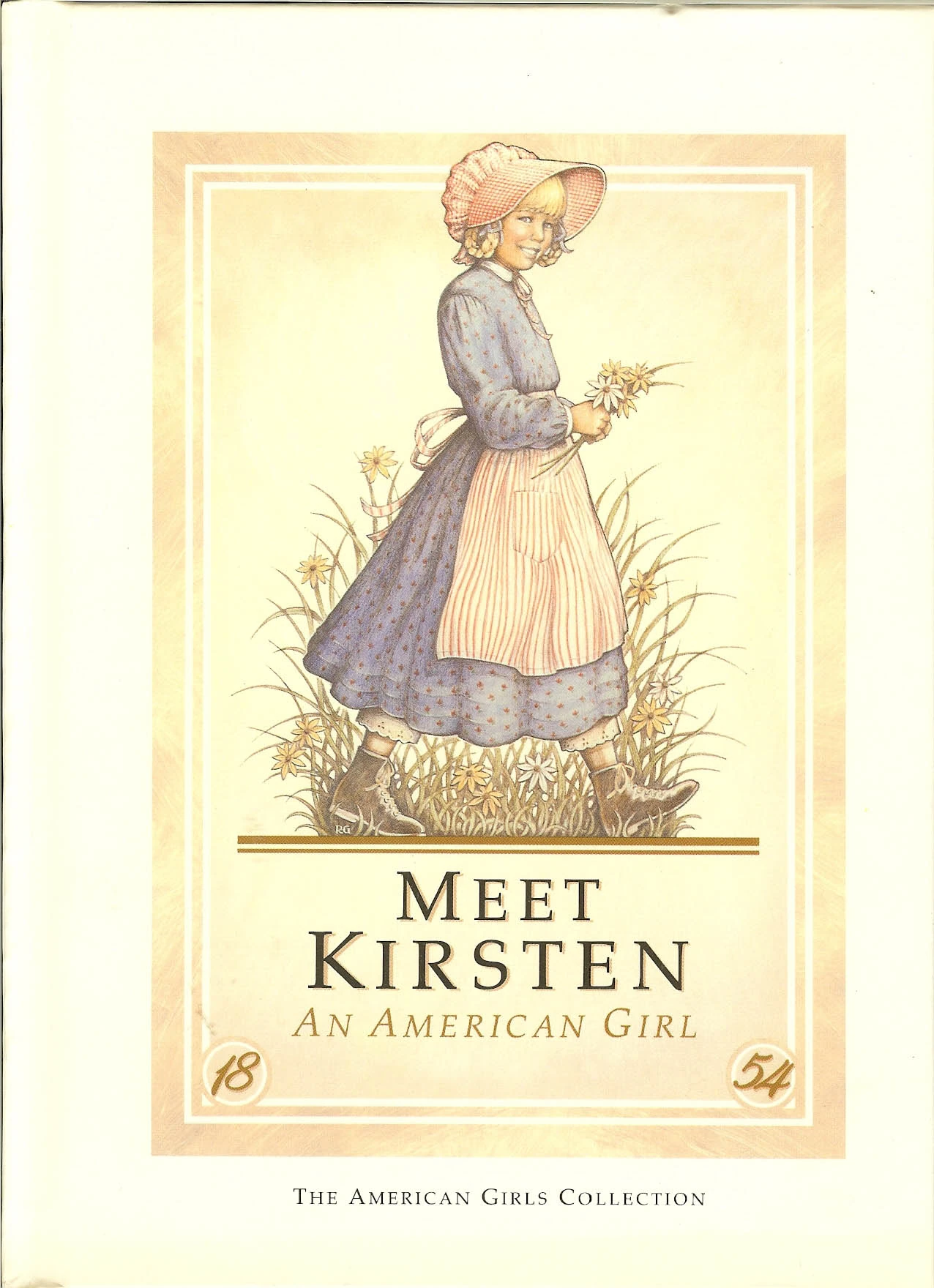
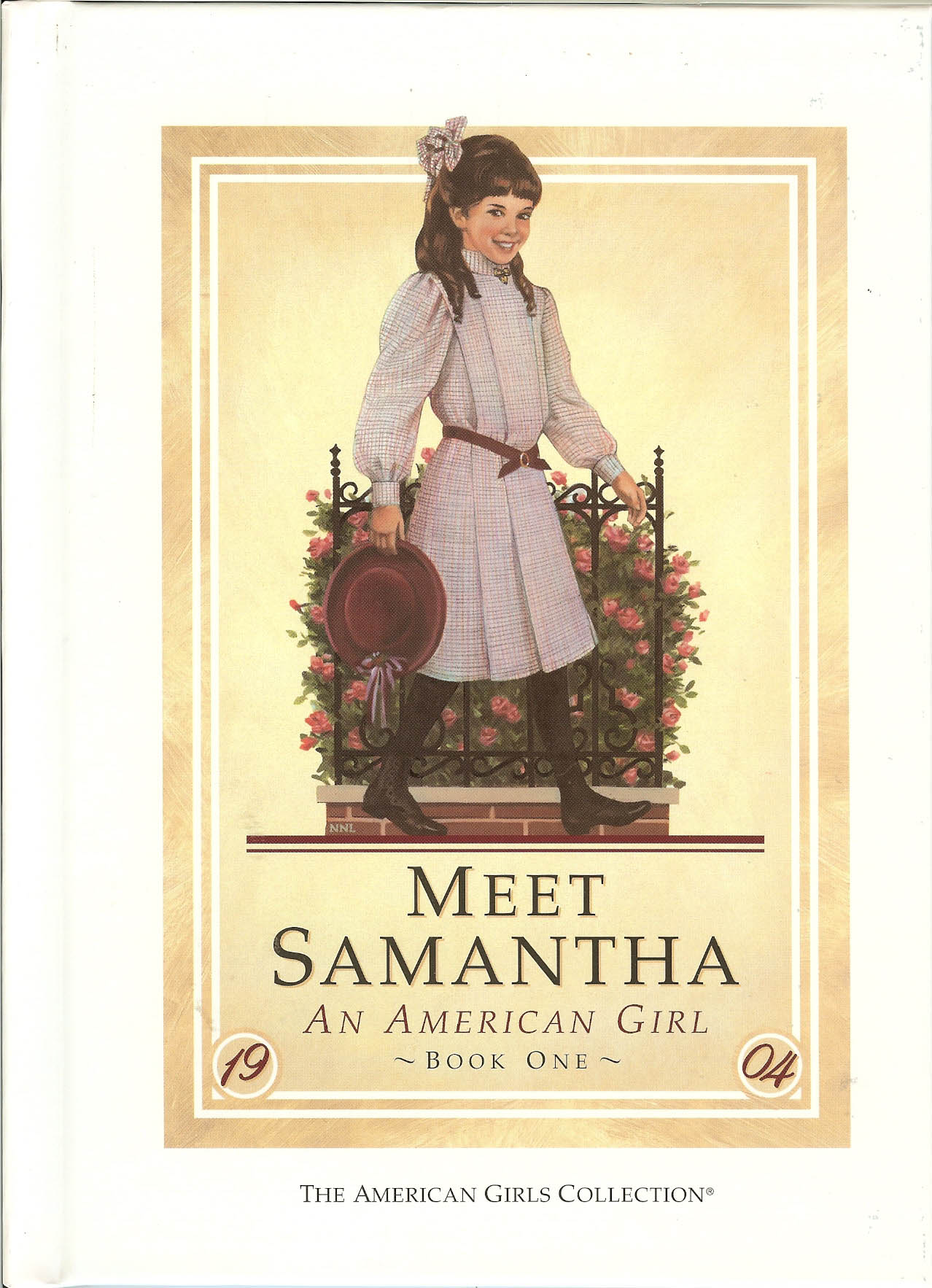
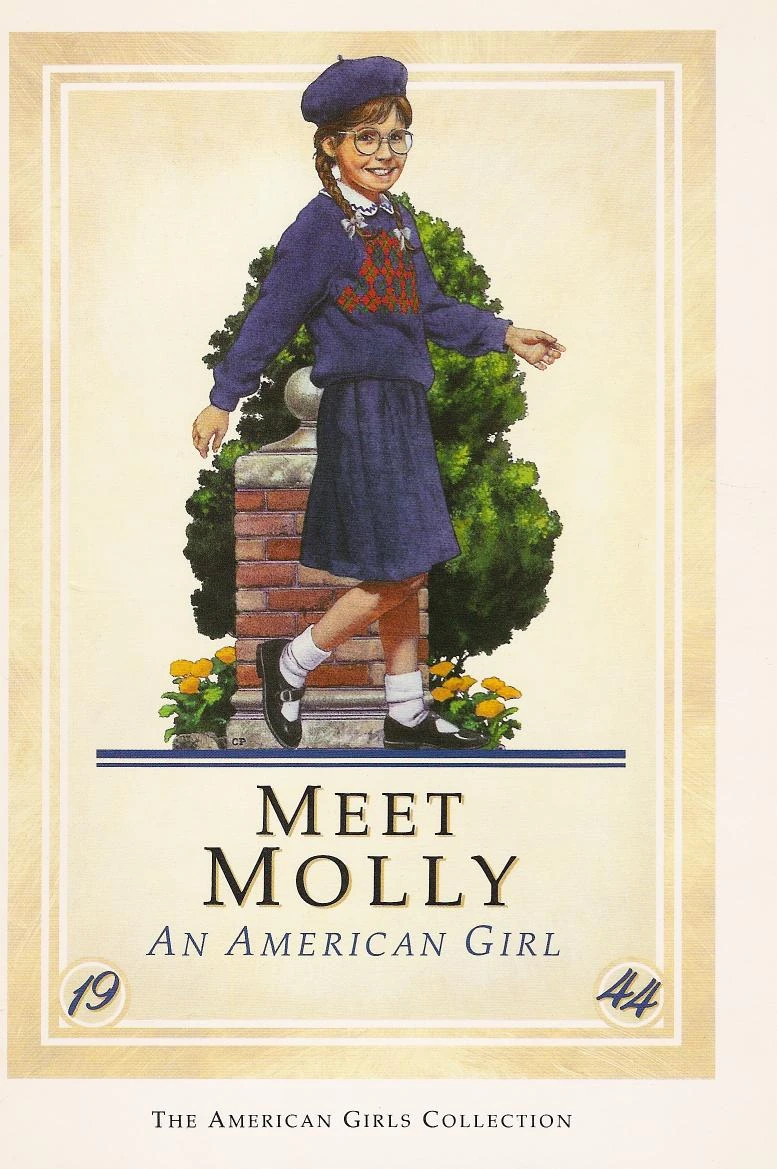
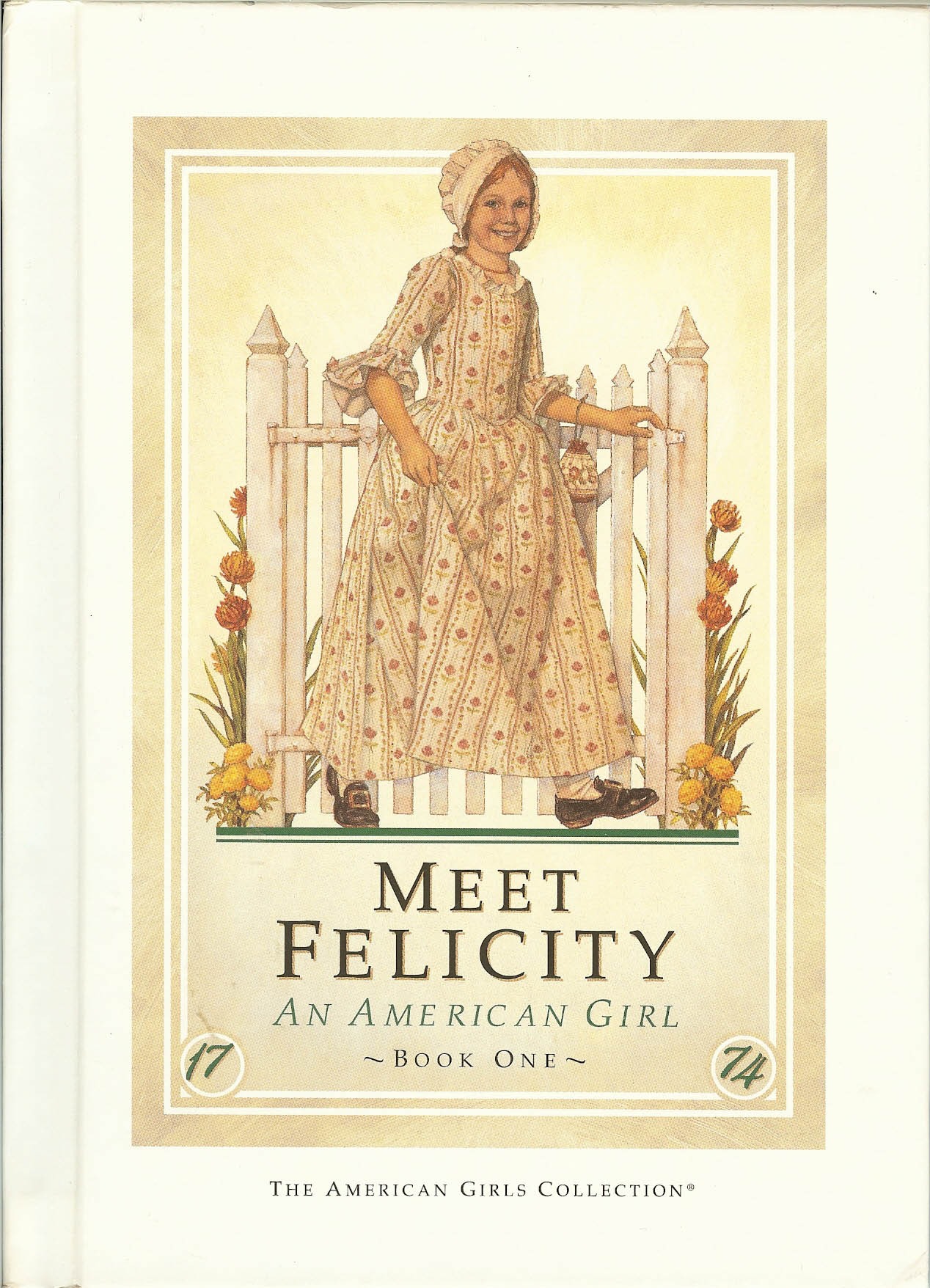
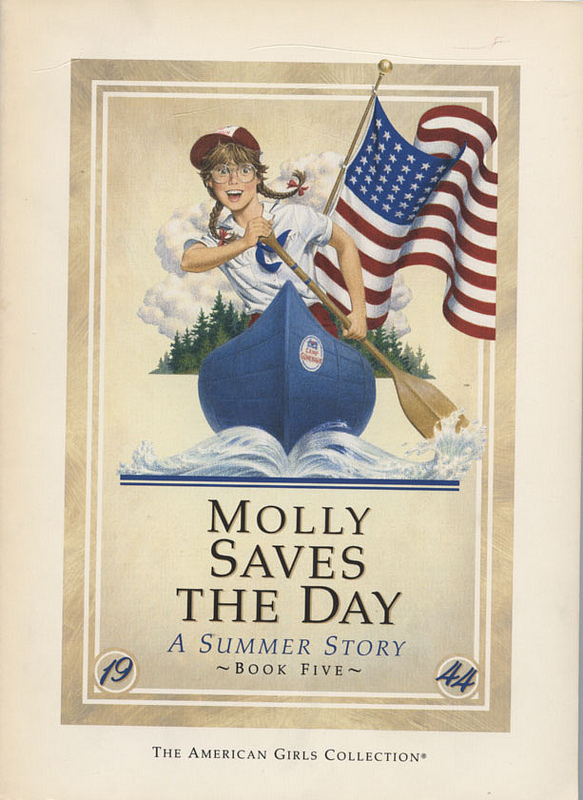
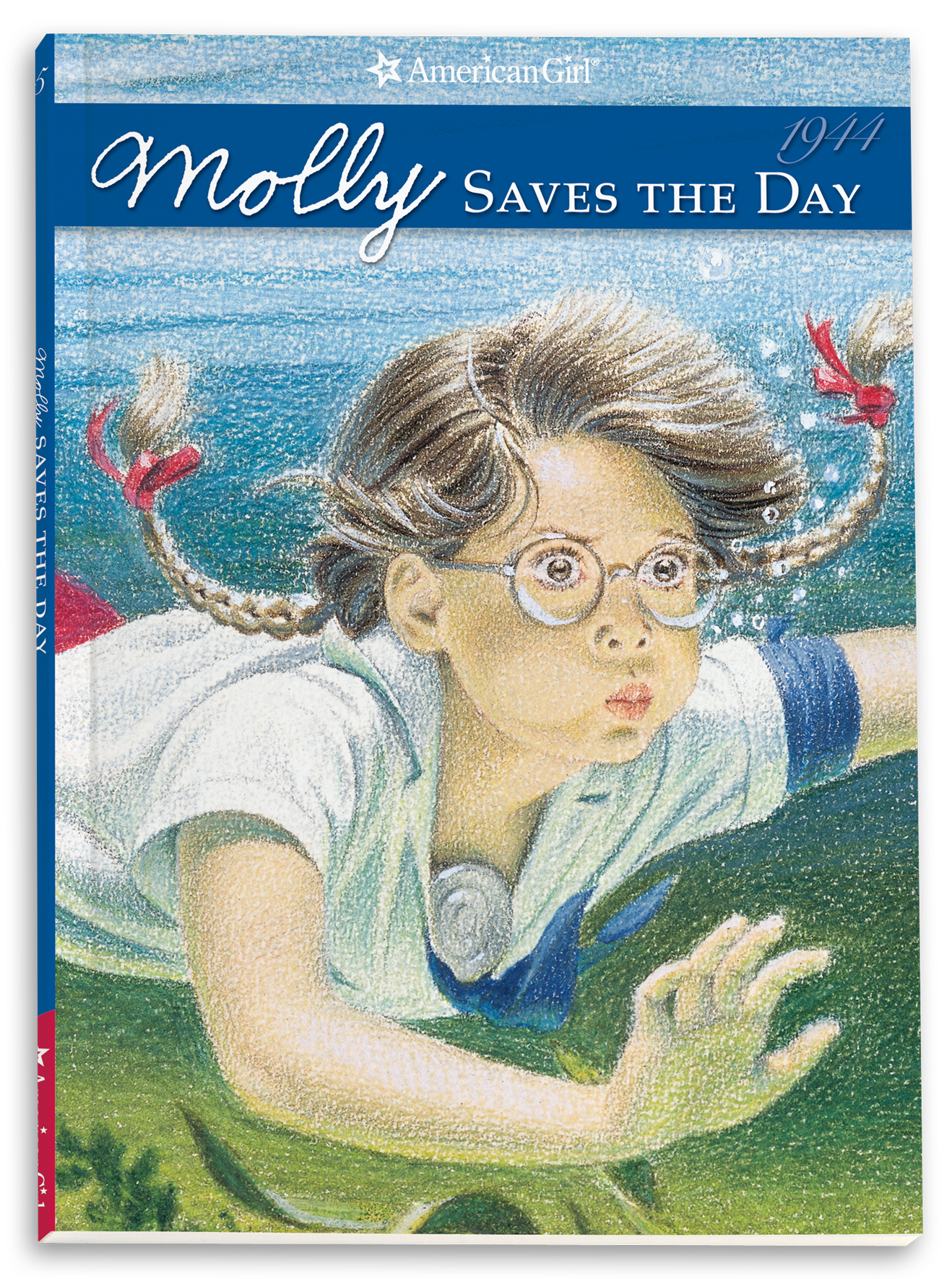
The series began in 1986 with three girls: Kirsten, Samantha, and Molly. Felicity was added in 1991, but that's around where my memory of them starts, as girls in my class at school were into them. And for a good stretch of time those original four were all we had. The girls were each from a different era of American history, with the series covering a year or two in their life. Each girl was branded with a year and that year always ended in a 4; Felicity was 1774, Kirsten 1854, Samantha 1904, and Molly 1944. Each girl had a series of six books with white covers. Each corresponding volume for each girl had generally the same title, and the cover art gave them similar poses albeit in different costumes, settings, and situations.


The pattern for the book series was as follows:
1. Meet _____: An American Girl
2. ____ Learns a Lesson: A School Story
3. ____'s Surprise: A Christmas Story
4. Happy, Birthday, ______!: A Springtime Story
5. ____ Saves the Day: A Summer Story
6. Changes For _____: A Winter Story

Every American Girl had each of these themes. The stories inside may have been unique, but the titles and cover art were basically the same, just with years and girls changed. And I liked that about the series. To me, that was always the essence of the company: that these girls were different, but also all kind of the same. We all have similar experience no matter where we're from or when we live. The structure laid out for the books unified the girls.

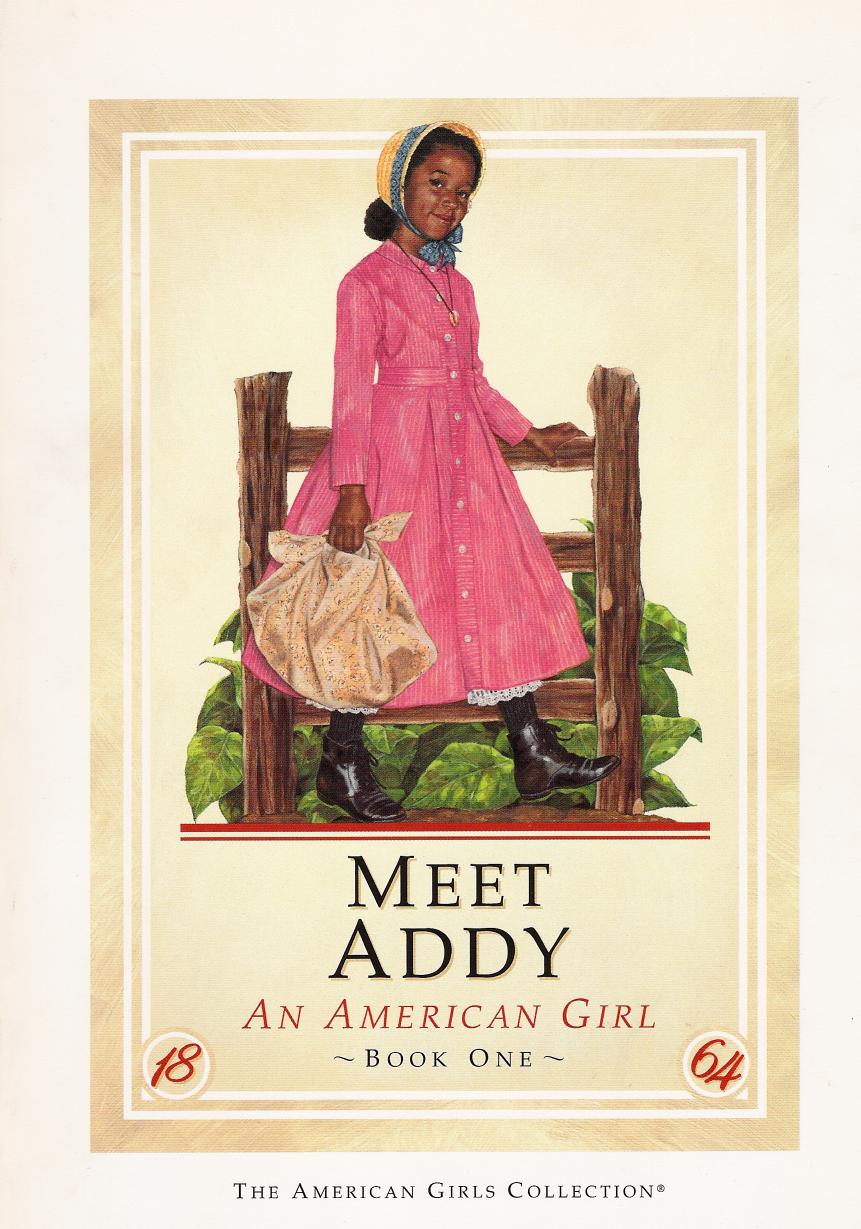
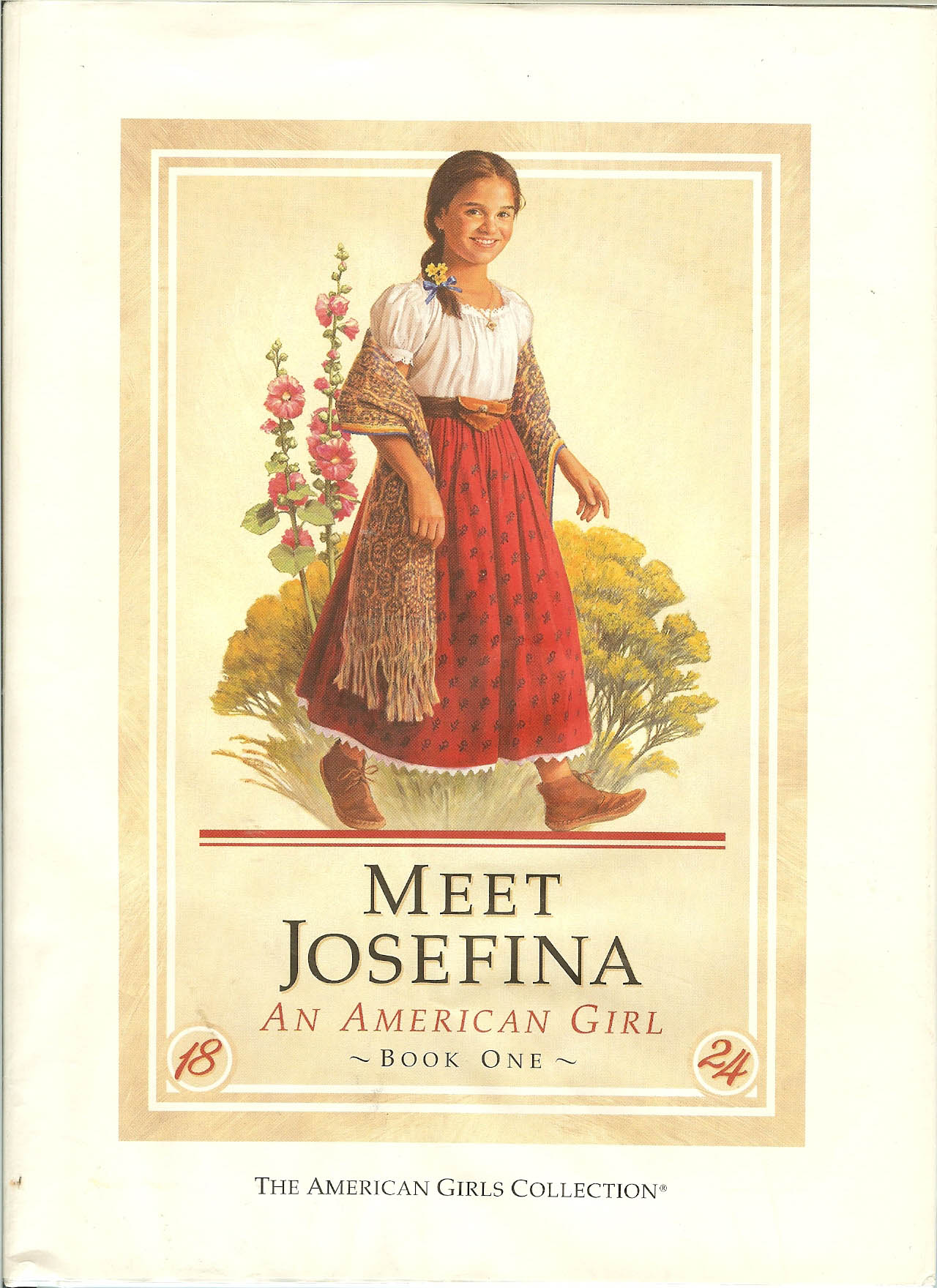
The years went by and the four white girls were were joined by some more diverse characters. The first of these was Addy (1864), the black American Girl. While I missed there just being four, I recognized that it was good to have a black girl in the group and not deny their history. So she was a generally welcome addition, and her books again followed that established formula. These five remained the only American Girls for another four years until a Hispanic character was created in 1997: Josefina (1824). Her books again followed the traditional formula. It was around this time that things changed and the company broadened to different types of things. And it also signaled that major changes were to come. Josefina was the last gasp of the original era.


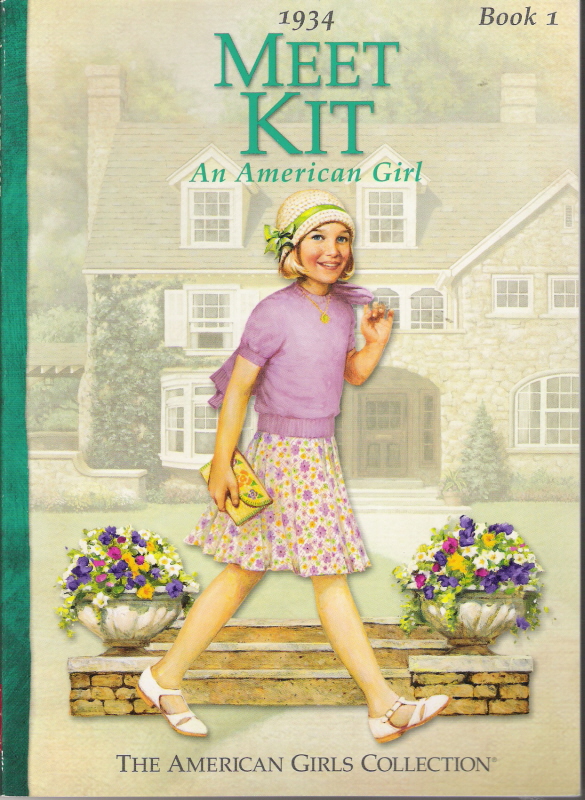
The year was 2000, and the newest American Girl was Kit Kittredge from 1934. Kit's book titles followed the pattern, but with Kit's launch came a redesign of the previous titles. The cover art was altered a bit to be full cover illlustration instead of the original design, and the all-white books were now gone. Instead, each girl was now color-coded and the book spines reflected that. Kirsten was a kind of brown or corn yellow, Samantha a dark red, Molly blue, Felicity a forest green, Addy brown (of course -- nothing racist about that), Josefina a bright red, and Kit a bright green. Kit also is the only American Girl to have her own theatrical feature film, released a few years later.


On one hand, I disliked the redesign of the front covers because to me they were so iconic. I had grown up with them. For almost 15 years they had been the same and now they were different. But I do acknowledge that the color coding was a sound idea to help differentiate quickly. It took a little bit of the uniformity away from the series, the thing I had liked, but not too much. The front cover art was basically the same, just enlarged and expanded to fill the whole cover instead of the upper portion. So while the general pattern was still in place, this was the first major change to the formula.


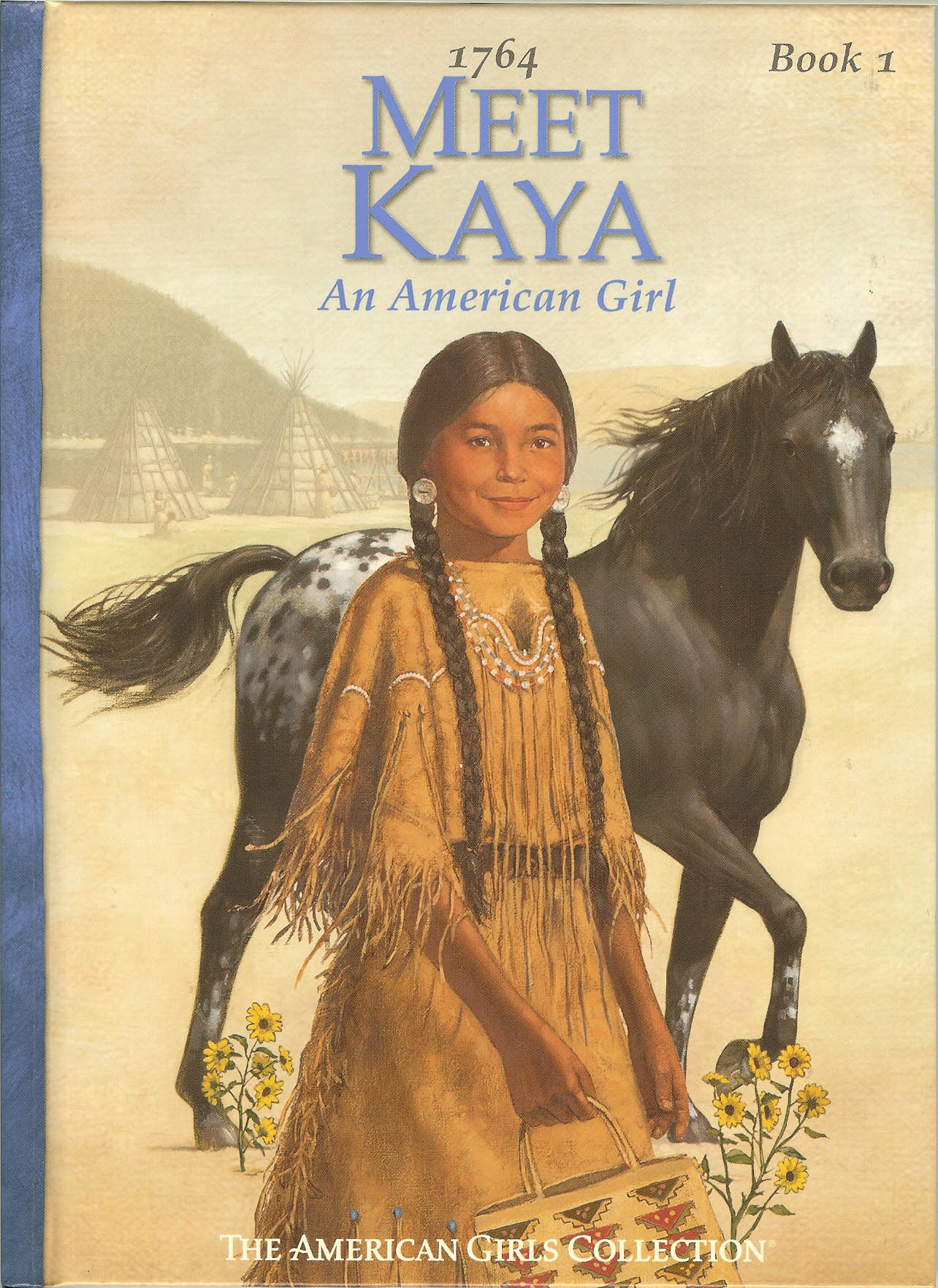
And then there was Kaya. Words cannot express how much I was bothered by the introduction of Kaya. It felt to me like a diversity step too far at the time. Kaya is the Native American girl, and she is from 1764. I don't object necessarily to including a Native American; they are American girls too. However, Kaya destroyed the uniformity that once existed. They set her at a time even before Felicity when the American colonies were still fairly young. This predates the nation we know as the United States. All of the other girls are part of that national identity; even Felicity though set in the colonial period is from the era of the Revolutionary War. Kaya is not a part of that; she is from a people separate who just happen to live on the same continent. So she's not an American Girl in the same way that the others are. I understand they probably intentionally did that to make a statement about how they were here first, but it makes her stick out instead of being part of the diverse-but-unified whole. That's not the worst of it though; that's just dressing. The worst was that her books are the first set to do away with most of the established formula.
1. Meet Kaya: An American Girl
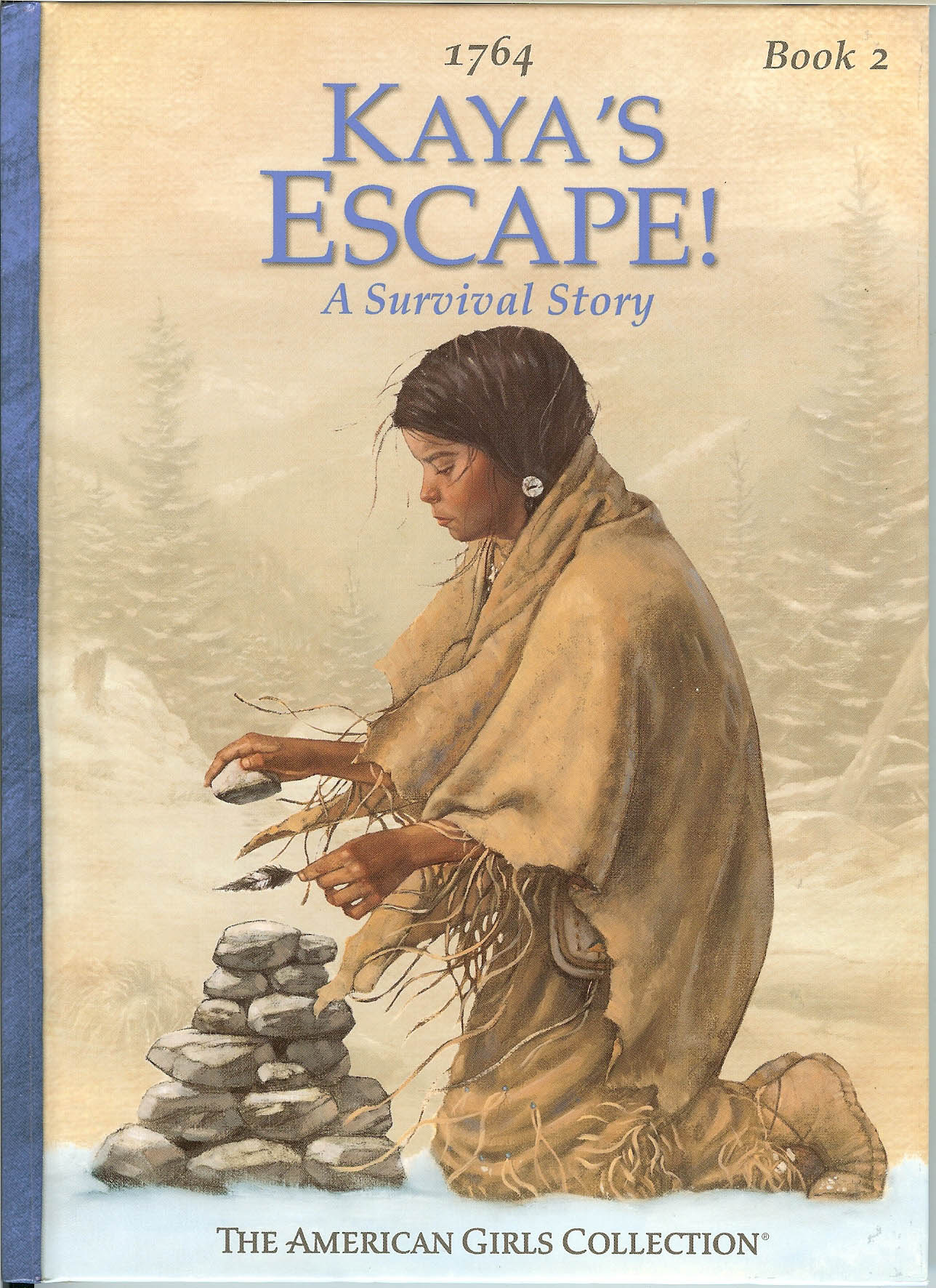
2. Kaya's Escape!: A Survival Story
3. Kaya's Hero: A Story of Giving
4. Kaya and Her Lone Dog: A Story of Friendship
5. Kaya Shows the Way: A Sister Story
6. Changes For Kaya: A Story of Courage

Right away, you can tell the difference. Only one and a half titles are the same as before! While I can certainly understand the cultural problems you would have with something like book 3 being a Christmas story, I see no reason it has to change so drastically. All the other girls' books were seasonal. Last I checked, everyone everywhere acknowledged seasons. So why doesn't Kaya have a summer story, a winter story, a springtime story? Why does she have to have an "Escape!" rather than learn a lesson? I would have afforded them a little leeway to deal with the Christmas thing or similar alterations, but these changes were drastic. It felt to me even like they were trying too hard, throwing in words like "survival" and "courage"; to me it almost makes her part of the "noble savage" trope, and that's not at all what this series should be about. The point should be that Kaya was a girl like all of the other girls. That's what I love about the series. Instead, they made Kaya "the Other". Titles for later girls would also now periodically buck the old established formula and it would never be the same. Kaya broke American Girl.

Two years later, in 2004, the entire line was redesigned again. It wasn't enough to have the color-coded spine. Now, all of the original cover art was changed to large different illustrations with the title and year in a colored stripe across the top. Also, each girl's name is singled out in cursive. This was the most drastic change yet to the line and again it upset me. Now every girl had a totally different dynamic illustration for each book. The point seemed to be to highlight their differences, rather than their similarities. The AmericanGirl logo now attached firmly to the top of each cover, it reflects the sensibilities of the corporation that sells Barbie dolls with its endless variety held together by a branded strip at the top, rather than what the series was originally, at least to me.


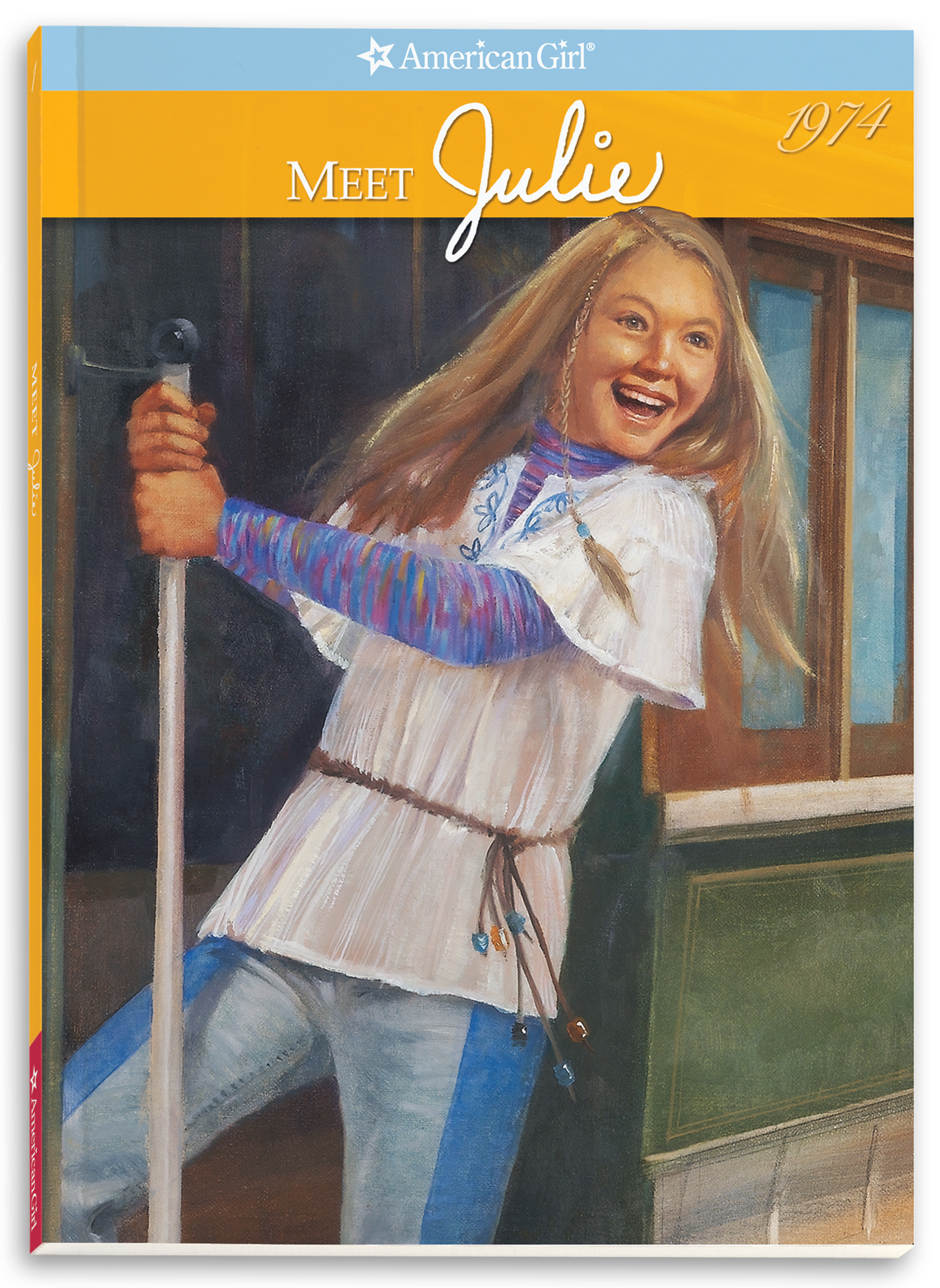
All these changes anticipated the release in 2007 of the new girl, Julie Albright, the most modern American Girl yet. She was from 1974. I remember first feeling strange about how recent that was. Consider, that is just a decade before the first American Girl dolls were released! We jumped from World War II with Molly to the 1970s. As with Kaya, the original structure was largely abandoned.
1. Meet Julie
2. Julie Tells Her Story
3. Happy New Year, Julie!
4. Julie and the Eagles
5. Julie's Journey
6. Changes For Julie
Note she also doesn't get a Christmas story; while it's similar, her book 3 is about Chinese New Year (not even western New Year!) because her best friend Ivy (I haven't even gotten into the best friends thing) is Chinese. So it's more diversity yet again, almost making you wonder why they didn't just give Ivy her own set of books. Why must the Asian girl be the "best friend"?

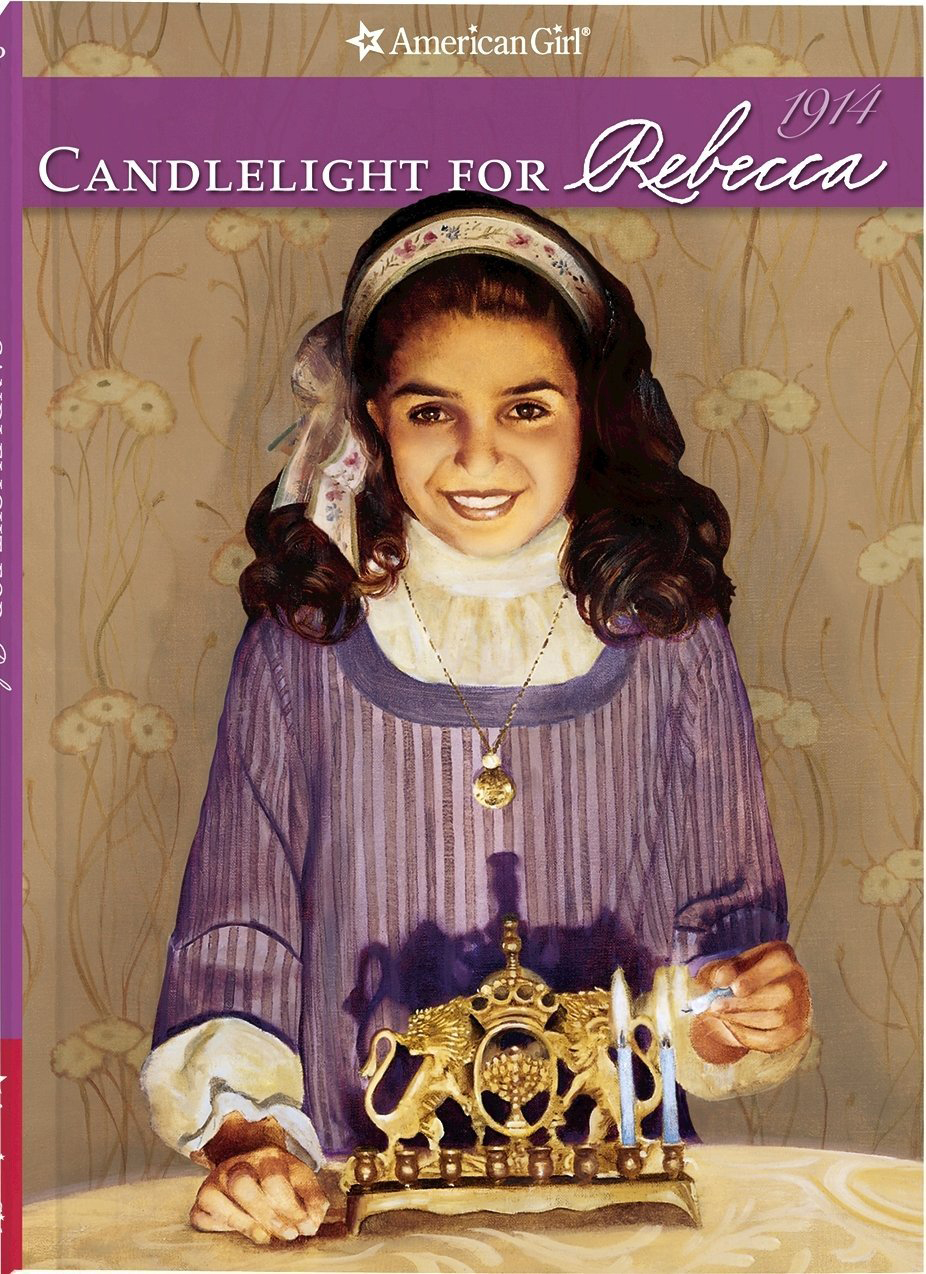
The series continues in this broken format for the next ten years so I will only highlight a few changes. The next girl introduced is Rebecca, and she is Jewish. So again, she gets a Chanukkah story instead of a Christmas story, and I'm fine with that. She is from 1914. I think she's a nice addition to the series, though again only the titles for books 1 and 6 remain the same.


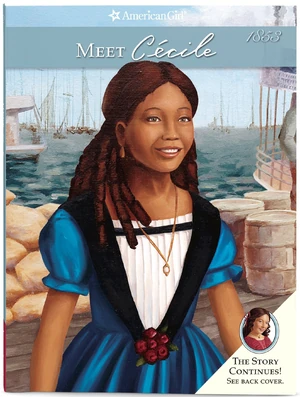
MeetCecile

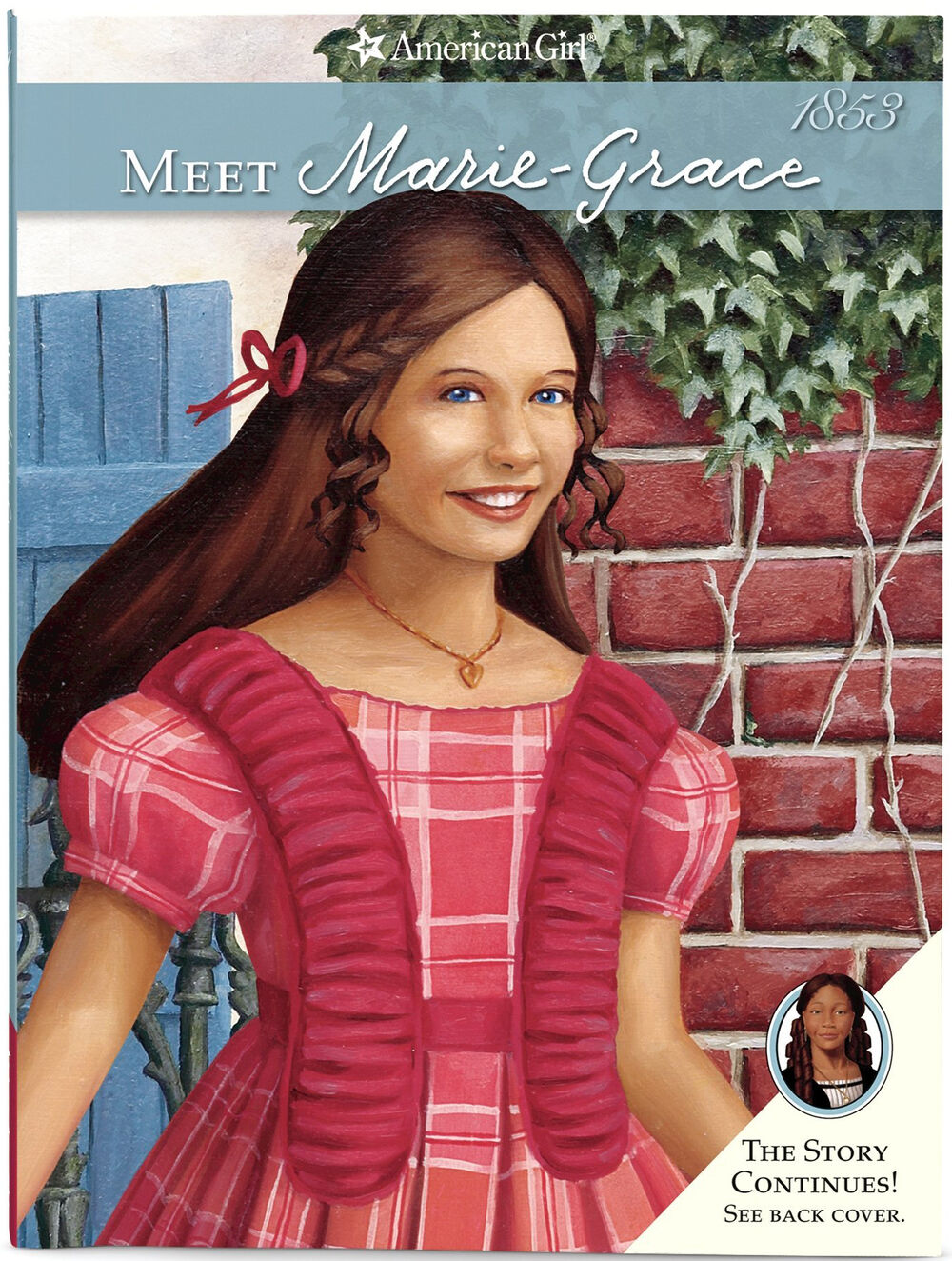
The next blow to series uniformity came with the release of Marie-Grace and Cecile who once again tore apart the fabric of what made this series. Now we have two girls sharing the six books, each alternating. The first two are "Meet" books, and that's the only thing connected to the old formula. Also for the first time in the series history they are from a year that doesn't end in 4. They are from 1853. This annoyed me for not only breaking the year formula, but because they are the first girls to share an era with another girl. Kirsten was already from 1854. And while their settings are drastically different, I think there are enough decades of American history the series hadn't yet explored or exploited, that do we really need two more girls shoved into the 1850s? Marie-Grace and Cecile's entire doll lines have been retired so perhaps the experiment backfired. Though Kirsten is also archived at present, along with the other originals, besides Samantha who was relaunched last year.

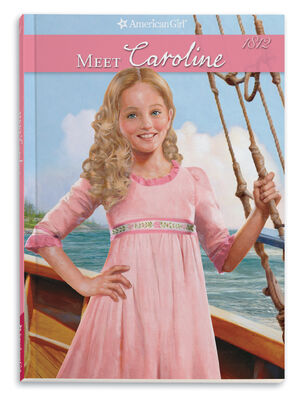
MeetCaroline

Caroline was then added a few years ago. She is from 1812, again ignoring the old dating system, because she's from the era of the War of 1812. I guess I can give them a pass on that since there's no way to relate to that war otherwise, but part of me would still rather she have come from 1814 and war stories came in dialog and memories. Her books are also different from the old formula, though book 3 is A Surprise For Caroline, which is close enough to the old one that I'll give them credit for it.

And that brings us to today. As you can see, changes have been frequent over the past 20 years, and what began as simple design and branding changes has become an alteration of the entire fabric of the original line. With Kaya, and later Marie-Grace and Cecile, the original structure was all but abolished. Those were the most drastic changes, but yet another drastic change has come. In 2014, the entire American Girl historical collection was rebranded as the BeForever line. What does that even mean? Why is there no space between words? American Girl was a series that promoted literacy among girls, and now it's branded with something that makes no grammatical sense. Clearly it's the thinking of toy marketers. So now each book has BeForever across the top of it. But that's not the worst of it. The worst is that the six book collections have been completely repackaged. Now, each girl's books is collected in 2 volume "classic collections" and each has a different title. For example, Samantha's first three books are now collected as Manners and Mischief and the latter three as Lost and Found. This is the final nail in the coffin for the original pattern. Almost all of the uniformity is now gone, replaced with a new structure of 2 omnibuses in the BeForever line. The color coding is now changed as well, and the girls who were archived are not currently part of the BeForever line.

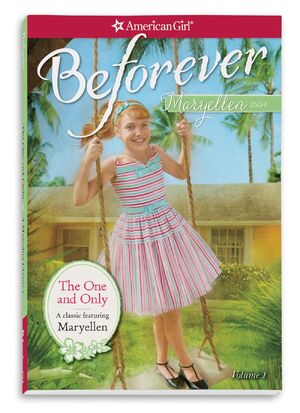
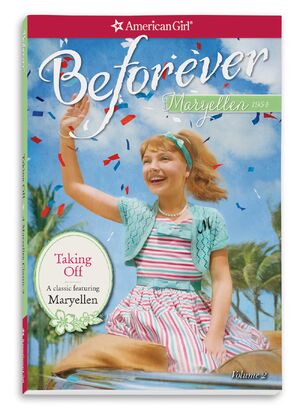
TheOneAndOnlyTakingOff

The one bright spot in the BeForever launch is the introduction of the newest girl, the first exclusive to this line. Her name is Maryellen, she was released this year, and she is from 1954. That return to the year ending in 4 is welcome, and I love that they went with the '50s. When Julie was released I questioned the move to the '70s when the '50s and '60s were untapped. I think her outfits are cool and there's a nice '50s aesthetic. It is sad though that she will never have the 6 books the others had; she gets only the 2 BeForever volumes. While they roughly correspond to what would have been the 6 books, it's still a shame, I think. She's the first one to not even get a "Meet ____" book.

I think what saddens me most about these changes over the years is that the elements I thought of as the core of the series are all but abolished. Sure, there's a nostalgia for the old way and that's part of it, but I also think there was really something to the uniformity. It wasn't just a marketing thing; it told you that there was a unity of experience. I know that American Girl is a doll company. I know they want to sell expensive dolls. But they always were, and in the best of circumstances the dolls sell the books and the books sell the dolls. There was a synergy there. To me, it seems that the company has shifted too far into thinking like doll-makers, treating the books like an afterthought or means to an end. I hope that this doesn't continue, but that instead they foster each as they can. I don't want American Girl to be just another example of corporate oversaturation. If the new BeForever branding at least helps to put a kind of uniformity back into the series, maybe that's good. Where do they go from here? There are so many other decades. There are fourteen historical American Girls, and yet there has not been a single redhead. Maryellen is kind of strawberry blonde. So if I had any say in it, the next American Girl would be a redhead, maybe set in the 1880s or 1890s. Make her an Irish immigrant, perhaps? I still believe in what the series can be: a way to make history real for kids and show them that it's our similarities across borders, boundaries, and time that ultimately unite us.


Wednesday, December 2, 2015

Black Lives Matter

Where I live in New England, one of the most common forms of wildlife is the squirrel. You see them everywhere. Particularly, the grey squirrel. If you grow up in this area and imagine a squirrel, that's the one you picture. So it might surprise some to learn there are other squirrels.

In Europe there are red squirrels. If you've seen Disney's The Sword in the Stone you might remember the girl squirrel was red. There is also an American red squirrel. We don't really see them as much around these parts.

And then there are black squirrels. I had a teacher who was so convinced black squirrels do not exist because she had never seen one. And for most of my life I hadn't seen one either. But I have seen them in Canada. They also live out in the western parts of Massachusetts. So I associate them with the northern and western areas. They are common in the midwest, apparently. But as long as I've lived, I've never seen them as far east as where I am.

That changed recently. I've been taking extra work on the north end of town, and in my walking over the past few months I've noticed black squirrels in the area by Framingham High School. I have walked down here many times before and never seen black squirrels. This seems to me to be a recent development. If indeed it is, I wonder what has caused the black squirrel population to migrate further southeast? Will we start seeing more black squirrels as the years go by? Will the blacks fight the greys for dominance?

I am curious why I'm seeing black squirrels here now. If you've never seen one, take a stroll down here and keep your eyes open.

Oh, and this should go without saying but just in case: there's nothing political about this post, despite the title. It's not a metaphor; it's just about squirrels. But interestingly as I read up on them, the black squirrels are basically the same species as the grey squirrels, just with a mutation causing different pigmentation. So black squirrels are to grey essentially as black people are to white. Again, no metaphor there, I just find it interesting.

Monday, July 6, 2015

Peppermint Patty is Not Gay

Okay, this has been bothering me for some time now and I really need to get it off my chest.

Here goes...

Peppermint Patty is not gay. And neither is Marcie. This is one of those "pop culture" things that will not die and I'm so so so tired of it. As recently as last month, Entertainment Weekly had a little sidebar in their gay pride issue about TV characters who gays identify with and one of them was Peppermint Patty. I can understand why people would relate to her, but that doesn't make her gay. I relate to Ariel, but that doesn't make me a sixteen year old girl or a mermaid, nor does it make Ariel a man.

Peppermint Patty is a tomboy, and she definitely stands out from the other girls of the Peanuts universe. Sally, Lucy, Patty (the other one that no one remembers), Violet all wear dresses. Peppermint Patty doesn't. She's athletic. And in most animated specials, she's got kind of a husky voice. But to take all of these things at face value and label her lesbian because of them is to deny her her identity for one ascribed to her, and to rob her of her nuance.

She's being raised by her father without her mother. Her psychology makes perfect sense that she would associate herself with more masculine attributes, as she's very close to her dad. There's a series of strips where the school demands she adhere to a new dresscode and stop wearing sandals and shorts. She doesn't feel like herself. And yet, this is not to say there is nothing feminine about her. For there is also a series in which she takes up figure skating and signs up for a competition. These were worked into the animated special She's a Good Skate, Charlie Brown. And in these, a decent amount of focus is put on the perfect skating outfit to wear. What she chooses is something feminine and skirted with sequins. To write her off as the butch baseball player is putting her in a box.

To ascribe a sexual attraction to girls to poor Peppermint Patty is to ignore the many many hints that she is attracted to Charlie Brown. It's a little bit tragic, since he's infatuated with the Little Red Haired Girl, and thus doesn't know what to do with her advances. But she certainly does make advances. How many times does she flirt with him with a "you kinda like me, dontcha Chuck?" She has only ever shown this sort of attraction to Charlie Brown. It's not as overt as Sally's crush on Linus, Lucy's attempts to woo Schroeder, or even Linus' brief infatuation with Miss Othmar, but it is absolutely there nonetheless.

72d84bc0f8a20130151a001dd8b71c47
June 13, 1972

Part of what seals the image of lesbian Peppermint Patty is her connection to Marcie. Indeed, some even suggest that it's Marcie who's gay. A recent Big Bang Theory agreed when Leonard, after it was suggested Peppermint Patty was gay said, "That's Marcie. Peppermint Patty's just athletic." Yes, Patty is just athletic, but neither does that prove Marcie is gay.

Why do people think Marcie is gay, or that the two are some sort of couple? Is it because they are always together? Linus and Charlie Brown are always together, and no one is suggesting they do unspeakable things beneath that blanket. Patty and Marcie hang out together all the time because they live on the other end of town (or in a neighboring town). Remember that Peppermint Patty's got her own baseball team separate from the rest of the gang. So she's going to spend more time with people closer to her.

I think some people assume that Marcie thinks Peppermint Patty is a boy, and that's why she calls her "Sir". Perhaps her poor vision plays into this, as Marcie wears glasses. But if that's the case, it would also be evidence against Marcie being gay, for even if she were attracted to Peppermint Patty it would be under the assumption she's male. But in reality, this reading is incorrect as well. Marcie is well aware Patty is a girl. The "sir" thing comes up as a sign of respect because when they first met, Peppermint Patty was a counselor at the girls' camp where they both were for the summer.

This is the first appearance of Marcie:

Cffb6a10f8a10130151a001dd8b71c47
July 20, 1971

So obviously Marcie calls her "sir" not because she's mistaken for a boy, but because she's in a leadership role, and Marcie's kind of a dork. I think Schulz kept the "sir" thing because he liked running gags. It also makes Marcie seems subservient to Peppermint Patty even though she's often really the brains of the operation. It's a relationship dynamic that works well comedically. But if all we've got to go on for this lesbian relationship is that, it's a very weak foundation.

702cf260f8a20130151a001dd8b71c47
June 8, 1972

Peppermint Patty and Marcie are just best friends and to insinuate anything beyond that is to suggest something strange about same-sex friendship. Just because people are close does not mean they are more than friends. And just because one friend is more "masculine" doesn't mean they are more than friends. And again, no one has suggested anything about any of the male characters being gay. I could say "Schroeder is totally gay for Beethoven and that's why Lucy doesn't get anywhere with him", but that would be ascribing things based on very little evidence. In fact, there's even a couple strips where Marcie admits she loves Charlie Brown, too. 
078d6980fb8a01301747001dd8b71c47
July 22, 1979

But hey, why take a character's words at face value when we can read them as queer pioneers?

I don't deny that in some ways Peppermint Patty is an outlier, and I can understand why gay viewers would relate to her. However, to try to put her and Marcie into this box because you want her to be that way is unfair to both characters. And from a broader standpoint, it suggests that sexual orientation is easily identified by external factors and trains readers to think "Of course this person is gay because..." I fear this does a disservice to everyone, gay and straight alike. It's like Ernie and Bert. People love to joke about them being gay, as if it's absurd to have a best friend. They've got separate beds. Maybe they're roommates because they took the cheapest apartment they could find in a puppet-friendly neighborhood. Anyway, by saying, "Oh, those are the gay ones," we undermine existing relationships and perhaps even foster homophobia. Maybe some athletic girl like Peppermint Patty doesn't want to be mistaken for a lesbian, and so she stops associating with her best friend. 

I'm tired of the armchair psychology that wants to ascribe sexual orientation to comic strip characters where no real evidence exists. The fact that so many have come to think of Peppermint Patty and Marcie as the Peanuts lesbians is I think really kind of sad. And I wanted to set the record straight. Peppermint Patty is not gay. She's a complex, funny, lazy, athletic, masculine, feminine character. In short, she's a girl. And she doesn't need any other qualifier. Neither does Marcie.

068dcce0fb8a01301747001dd8b71c47
July 21, 1979